

First-Time Buyer Mistakes: 20 Costly Errors to Avoid

First-Time Buyer Mistakes: Common Mistakes to Avoid
Buying your first home in the UK is an exciting milestone, but the process can also be complicated. From arranging a mortgage and saving a deposit to viewing properties, making an offer and completing the legal process, there are many decisions to get right.
The good news is that many first-time buyer mistakes can be avoided with proper preparation.
Common problems include searching for properties before understanding your mortgage budget, underestimating the full cost of buying a home, using every penny of your savings for the deposit, skipping a property survey, overlooking leasehold costs and making an emotional offer.
This guide explains the most common first-time buyer mistakes in the UK, what can go wrong and what you can do instead.
Quick answer: The most common first-time buyer mistakes include setting an unrealistic budget, not getting a mortgage in principle, overlooking buying costs, using all your savings for a deposit, ignoring your credit profile, rushing property viewings, skipping a survey, failing to check leasehold terms, making an emotional offer and underestimating the costs of owning a home.
First-Time Buyer Mistakes at a Glance
| Mistake | Why it matters | What to do instead |
|---|---|---|
| No mortgage in principle | You may search outside your realistic budget | Get an Agreement in Principle before serious viewings |
| Unrealistic budget | Your lender's maximum is not necessarily affordable | Calculate your complete monthly housing costs |
| Ignoring buying costs | Legal, survey and moving costs can add up | Create a separate buying-cost budget |
| Using all savings for deposit | You may have no emergency fund | Keep money aside for unexpected costs |
| Waiting unnecessarily for a 20% deposit | You could delay buying for years | Compare deposit size, LTV and mortgage costs |
| Choosing the first mortgage | It may not suit your circumstances | Compare rates, fees and total cost |
| New credit applications | They can complicate your mortgage application | Avoid unnecessary borrowing before completion |
| Skipping a survey | Expensive defects may be missed | Choose an appropriate property survey |
| Rushing a viewing | Problems may be overlooked | View carefully and revisit if necessary |
| Ignoring the area | The property may not suit your lifestyle | Research transport, schools, services and future plans |
| Ignoring leasehold terms | Service charges and restrictions can affect costs | Review the lease and ask questions |
| Making an emotional offer | You could overpay | Research comparable properties and sold prices |
| Ignoring legal checks | Title or property issues may emerge later | Use a qualified conveyancer |
| Giving rental notice too early | Your purchase may be delayed | Usually wait until the appropriate stage of the transaction |
1. Starting Your Property Search Without an Agreement in Principle
One of the most common mistakes first time buyers make is starting their property search before understanding how much they can realistically borrow.
A mortgage agreement in principle (AIP), also called a mortgage in principle or decision in principle, gives you an indication of how much a lender may be prepared to lend based on information available at that stage.
It is not a final mortgage offer.
An AIP can help you:
- understand your potential borrowing range
- set a realistic property budget
- show sellers and estate agents that you are serious
- move more quickly when you find a suitable property
- avoid wasting time viewing homes outside your likely budget
The government's How to Buy a Home guide on GOV.UK explains that most lenders carry out a credit search as part of a decision in principle. Some use a soft enquiry that does not affect your credit score, while others use a hard enquiry that may. Ask each lender which type it uses before you apply, because a run of hard enquiries in a short period can work against you.
AIP vs formal mortgage offer
These terms are not interchangeable.
| Agreement in Principle | Formal mortgage offer | |
|---|---|---|
| Based on | Information you declare | Verified documents and underwriting |
| Property | No specific property needed | A specific property, after valuation |
| Binding on lender | No | Yes, subject to conditions |
| Typical stage | Before viewings and offers | After your offer is accepted |
| Typical validity | Around 30 to 90 days | Usually around 3 to 6 months |
A lender can still decline your full application after issuing an AIP, most often because verified income differs from what you declared, the valuation comes in below the agreed price, or your circumstances changed in between.

First-time buyer tip: Get your finances organised before spending too much time browsing properties.
2. Setting an Unrealistic Budget
Another major first time buyer mistake is assuming that the maximum amount a lender is willing to offer is the amount you should spend.
It isn't necessarily. Your lender's maximum borrowing figure does not account for every aspect of your future lifestyle. You still need to pay for food, transport, utilities, Council Tax, insurance, repairs, maintenance and other everyday expenses.
Calculate your real monthly housing cost
Don't look only at the mortgage repayment. Your monthly budget may also include:
- mortgage repayment
- Council Tax
- gas and electricity
- water
- broadband
- buildings and contents insurance
- service charges, if applicable
- ground rent, where applicable
- maintenance
- regular household expenses
It is also sensible to test your budget against possible changes in your circumstances.
For example: could you still afford the property if your energy bills increased, your fixed rate ended at a higher rate, or your income temporarily decreased?
If the answer is no, your budget may be too aggressive. The government-backed service MoneyHelper recommends preparing a budget before you start your property search and checking that repayments remain affordable alongside everyday spending.
3. Forgetting the Full Cost of Buying a Home
One of the biggest home buying mistakes is focusing almost entirely on the deposit. Your deposit is only one part of the total cost.
MoneyHelper estimates that buying or selling a home can involve more than £5,000 in fees, excluding the deposit and Stamp Duty or Land Tax, although actual costs vary considerably by transaction and location.
Typical costs of buying a home in the UK
| Cost | Typical range | Notes |
|---|---|---|
| Mortgage arrangement or product fee | Up to around £1,500 | Some deals are fee-free |
| Mortgage valuation | Up to around £300 | Often free; carried out for the lender |
| Conveyancing legal fees | £800 to £1,800 plus disbursements | Leasehold usually costs more |
| Property searches | £250 to £450 | Local authority, drainage and water, environmental |
| Land Registry registration fee | £200 to £300 for many purchases | Tiered by property value |
| Property survey | £400 to £1,500 | Depends on survey level, property value and location |
| Stamp Duty Land Tax | £0 for most first-time buyers under £300,000 | England and Northern Ireland only |
| Removals | £450 to £1,400 | Less if you hire a van yourself |
| Buildings insurance | Varies | Usually needed from exchange of contracts |
| Immediate repairs and furnishings | Varies widely | Budget deliberately rather than using credit |
These are typical published ranges rather than quotes. Always obtain written quotes for your own purchase, and note that several of these costs are payable whether or not the purchase completes.
Do first-time buyers pay Stamp Duty?
In England and Northern Ireland, eligible first-time buyers currently pay no Stamp Duty Land Tax on the first £300,000 of a qualifying purchase, then 5% on the portion between £300,001 and £500,000. If the purchase price is above £500,000, first-time buyer relief is not available and standard rates apply to the whole price.
| Purchase price | First-time buyer SDLT |
|---|---|
| Up to £300,000 | £0 |
| £350,000 | £2,500 |
| £400,000 | £5,000 |
| £500,000 | £10,000 |
| Above £500,000 | Standard rates, no relief |
Stamp Duty is normally paid to HM Revenue & Customs within 14 days of completion, usually handled by your solicitor or conveyancer. Scotland uses Land and Buildings Transaction Tax and Wales uses Land Transaction Tax, so check the rules for the nation where you are buying.
Thresholds change, so confirm current rates on GOV.UK's Stamp Duty Land Tax rates page before you budget, or work out your own figure with MoneyHelper's Stamp Duty calculator.

4. Using All Your Savings for the Deposit
Saving a larger deposit can reduce your loan-to-value ratio and may give you access to better mortgage deals. However, using every penny you have for the deposit can also be a mistake.
For example, imagine you have £30,000 saved. It may be tempting to put the full £30,000 into your deposit. But if you then need £3,000 for legal costs, moving expenses and urgent repairs, you could find yourself financially stretched immediately after completion.
A better approach is to separate your savings into three parts:
Deposit + buying costs + emergency reserve
You may need cash after completion for:
- replacing a broken appliance
- repairing a boiler
- fixing plumbing issues
- decorating and essential furniture
- unexpected bills
- covering temporary income disruption
Many buyers aim to keep back three to six months of essential outgoings. If holding that back means you cannot afford the property, that tells you something useful about the property rather than about your savings.
The right deposit is therefore not simply the biggest deposit you can possibly produce. It is the deposit you can afford without leaving yourself financially exposed.
5. Waiting for a 20% Deposit When You May Not Need One
A common misconception is that first-time buyers must save a 20% deposit before they can buy. That is not generally the case.
Many mortgages are available with smaller deposits. MoneyHelper notes that deposits are commonly around 5% to 20% of the property price, although availability, rates and eligibility depend on the lender and your circumstances.
How deposit size affects your mortgage
| Property price | Deposit | Mortgage | Approx. LTV |
|---|---|---|---|
| £250,000 | £12,500 (5%) | £237,500 | 95% |
| £250,000 | £25,000 (10%) | £225,000 | 90% |
| £250,000 | £37,500 (15%) | £212,500 | 85% |
| £250,000 | £50,000 (20%) | £200,000 | 80% |
Lenders price mortgages in loan-to-value bands, and rates typically improve as you move below 90%, 85%, 80% and 75%. Saving a little longer to reach the next band down can reduce your monthly repayment, which is a genuine trade-off against rising rents and moving house prices.
Support available to first-time buyers
Several schemes exist for buyers with smaller deposits. Eligibility rules change, so check MoneyHelper's guide to government schemes for first-time buyers for the current position before planning around any of them.
- Mortgage Guarantee Scheme (Freedom to Buy). Supports 91% to 95% loan-to-value lending by giving participating lenders a government-backed guarantee. Permanently available across the UK since July 2025, on homes up to £600,000. The property must be your only home and the mortgage must be a repayment mortgage. Not all lenders participate.
- Lifetime ISA. You can pay in up to £4,000 a year and the government adds a 25% bonus, up to £1,000 a year. You must be 18 to 39 to open one, and the property must cost £450,000 or less. Withdrawing for anything other than a first home or retirement triggers a 25% withdrawal charge.
- Shared Ownership. You buy an initial share of a home, typically between 10% and 75%, and pay rent on the remainder, increasing your share over time. Rules differ across England, Scotland, Wales and Northern Ireland.
- First Homes. Eligible first-time buyers in England can buy certain new-build homes at a discount of at least 30% of market value, with the discount passed on at resale.
So the question is not simply "can I reach a 20% deposit?" It is “what deposit can I afford while keeping enough cash for buying costs and an emergency fund?”
6. Choosing the First Mortgage You Are Offered
Do not automatically accept the first mortgage product you see. Mortgage products can differ in:
- interest rate
- fixed-rate period
- tracker or variable structure
- arrangement fees
- early repayment charges
- mortgage term
- overpayment options
- eligibility requirements
- total cost over the deal period
A lower rate with a £1,499 arrangement fee can cost more overall than a slightly higher fee-free deal, particularly on a smaller mortgage. Compare total cost over the deal period, not the headline rate alone.
Getting a decision in principle from one lender does not commit you to taking the mortgage with that lender.
Consider getting professional mortgage advice
A regulated mortgage adviser or broker can help you understand the options available, particularly if your circumstances are more complicated. Before instructing anyone, check the firm is authorised by the Financial Conduct Authority and look it up on the Financial Services Register. Ask upfront whether it charges a fee, earns commission from the lender, or both, and whether it searches the whole market.
You should still understand the key terms of any mortgage before committing, including what happens when the fixed period ends.
7. Making Too Many Credit Applications
Applying for several financial products shortly before or during a mortgage application can create unnecessary complications.
Avoid making major new applications for:
- credit cards
- personal loans
- car finance
- buy-now-pay-later agreements
- other significant borrowing
Each formal application usually leaves a hard search on your credit file, and a cluster of hard searches can make lenders cautious. New borrowing also adds monthly commitments that reduce the amount a lender will offer.
This does not mean you should never compare mortgages. It means understanding how different lenders conduct credit checks and avoiding unnecessary borrowing while your mortgage application is progressing.
8. Ignoring Your Credit Profile
Your credit history is another area to review before applying for a mortgage. Check your reports with all three main credit reference agencies, Experian, Equifax and TransUnion, because lenders do not all use the same one.
Look for:
- incorrect personal details
- accounts that do not belong to you
- missed-payment information that appears inaccurate
- outstanding balances
- old financial accounts you thought were closed
- other credit commitments
Then take the practical steps that help:
- Register on the electoral roll at your current address, which helps lenders verify your identity
- Reduce existing commitments where you can, since they directly reduce borrowing capacity
- Keep payments on time, including phone and utility accounts
- Keep your bank statements tidy, as lenders review several months of them
If you find an error, allow time to investigate and correct it before making important mortgage applications.
First-time buyer tip: Don't wait until you have found your dream home to discover a problem with your credit file. Review your finances early.
9. Falling in Love With a Property Too Quickly
This is one of the most emotional mistakes when buying a house. A beautifully decorated kitchen, large garden or stylish living room can make a property feel perfect.
But a property needs to work financially and practically as well as emotionally.
Before making an offer, consider:
- Is the asking price realistic compared with recent local sales?
- Can you comfortably afford it?
- Does the location work for your lifestyle?
- Are there signs of damp?
- Will you need major repairs?
- How much will commuting cost?
- Is there enough storage?
- Is the property suitable for your future plans?
- Are there service charges or other ongoing costs?
- What is the condition of the roof, windows and heating system?
The goal is not to remove emotion from the process. It is to make sure emotion does not replace due diligence.
10. Rushing Your Property Viewing
A quick five-minute viewing is rarely enough to properly understand a property. Look beyond furniture, paint colours and staging.
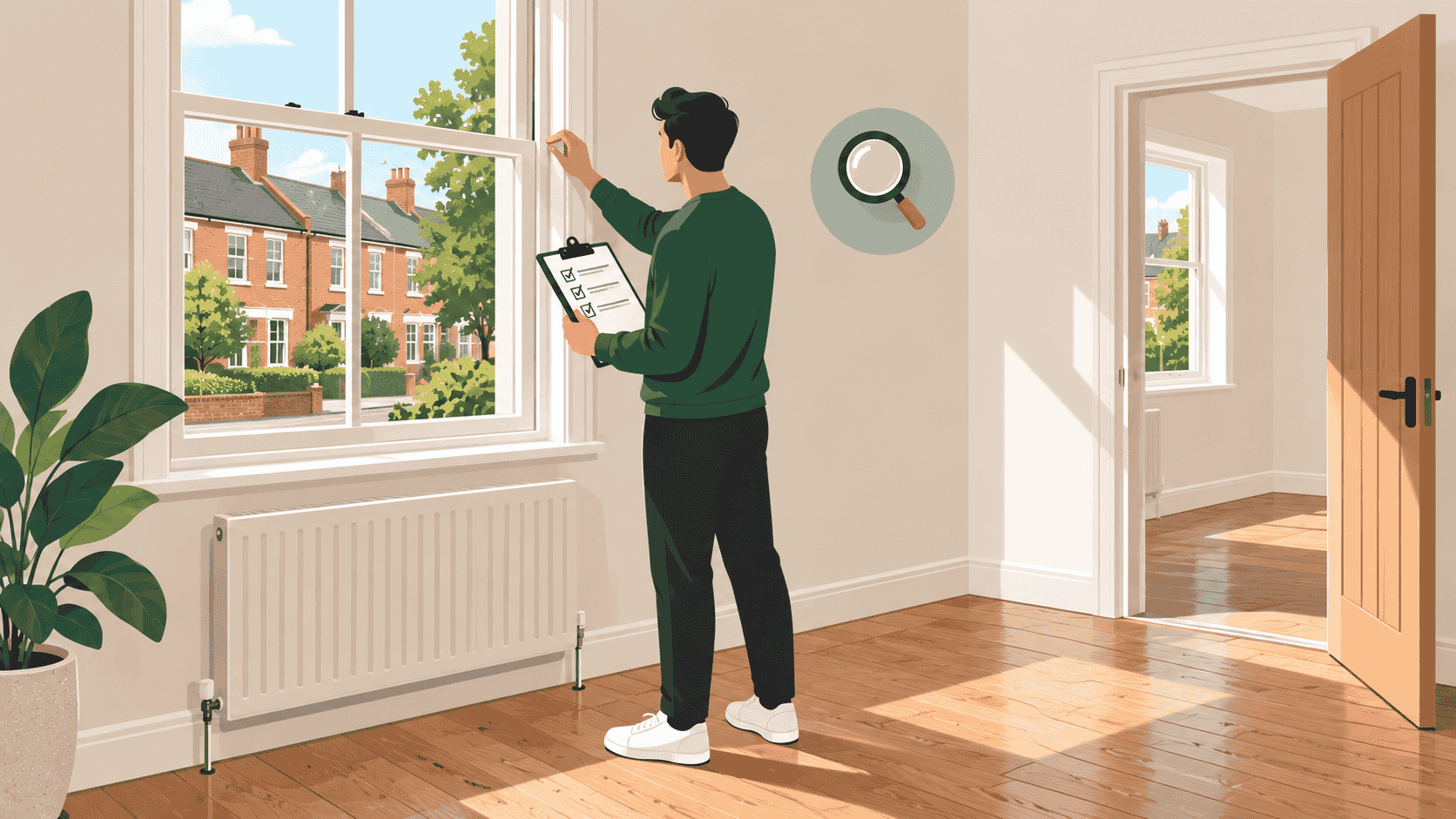
Inside the property
- ceilings and walls for cracks
- signs of damp or mould, including tide marks and black spotting
- windows and frames, and condensation between double-glazed panes
- doors that do not close squarely
- heating system and boiler age
- radiators in every room
- plumbing and water pressure
- electrical sockets and the consumer unit
- storage and ventilation
- natural light and orientation
- loft access, where relevant
Outside the property
- roof condition
- gutters and downpipes
- external walls and brickwork
- drainage
- garden and boundaries
- signs of structural movement
The surrounding area
- traffic noise
- parking
- public transport
- local shops and schools
- commuting routes
- broadband availability and mobile signal
- nearby development and planning applications
- flood risk where relevant
If possible, visit at different times of day. A quiet Saturday afternoon may not tell you what the neighbourhood feels like during a weekday rush hour.
11. Skipping the Property Survey
Skipping a survey to save money can become an expensive first time buyer mistake.
A mortgage valuation is not the same thing as a full property survey. A valuation checks whether the property provides suitable security for the amount being lent. It is not a structural inspection and may not identify repairs or maintenance issues.
RICS, the Royal Institution of Chartered Surveyors, recommends a home survey for buyers, explaining that it provides an assessment of the property's condition and identifies problems that may need attention.
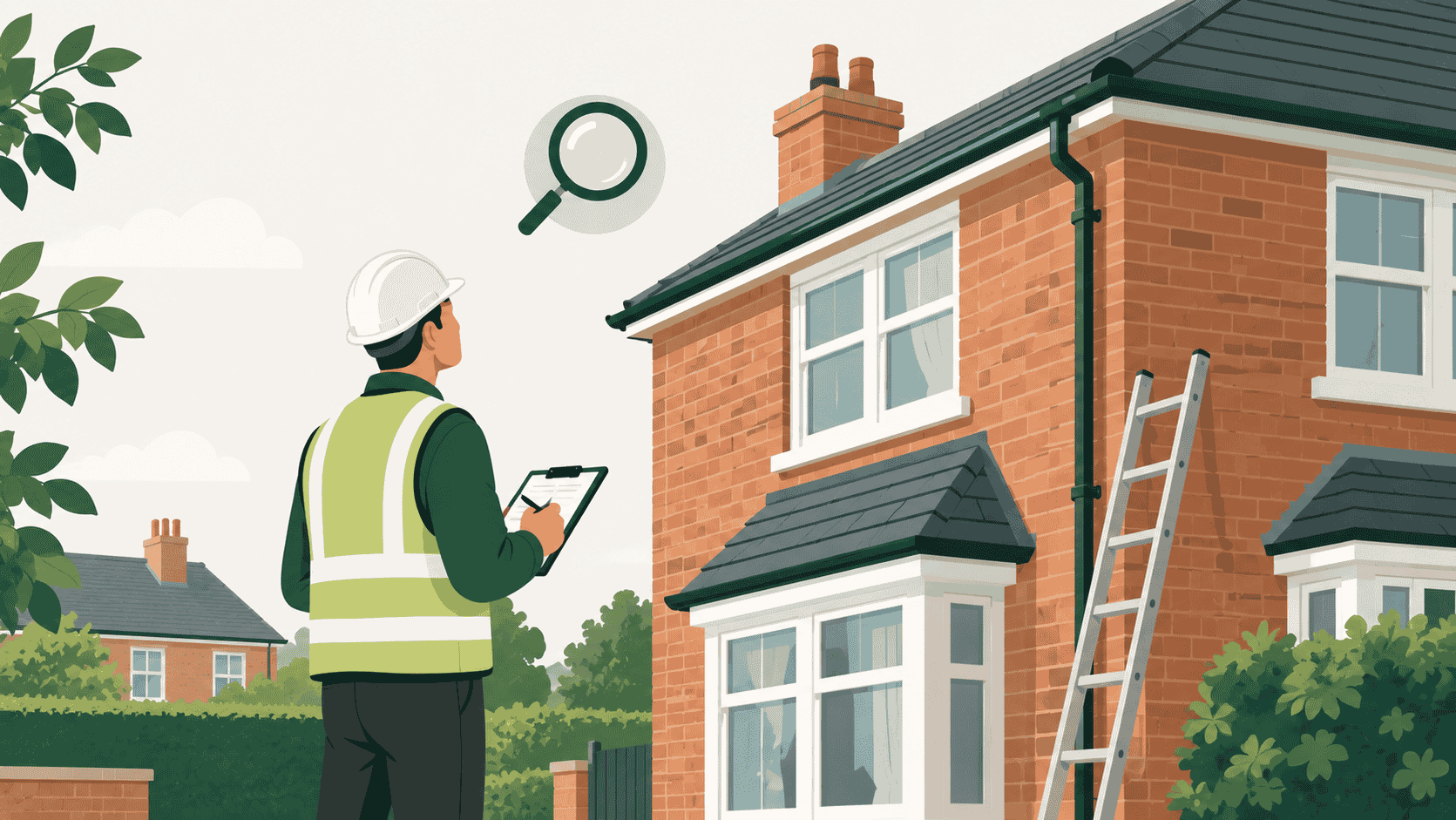
RICS Home Survey levels
| Survey level | What it covers | Often suited to |
|---|---|---|
Level 1 | A basic condition report using a traffic-light rating system, with limited detail | Conventional, modern properties in relatively good condition |
Level 2 | A more detailed inspection covering condition, defects and maintenance, available as survey only or survey and valuation | Many conventional homes in reasonable condition |
Level 3 | A comprehensive inspection with detailed analysis of defects and their likely causes | Older, larger, unusual, listed or substantially altered properties |
The appropriate survey depends on the property rather than simply choosing the cheapest option. Level 1 sits at the lower end of survey costs while Level 3 can cost substantially more. You can find an accredited professional through RICS Find a Surveyor.
What to do if the survey finds problems
Most surveys find something. The question is what it costs and who pays for it.
- Read the full report, including any recommendations for further investigation
- Get written quotes from qualified trades for significant items
- Decide whether to renegotiate, ask the seller to carry out work before exchange, proceed, or withdraw
- Speak to your conveyancer, who can raise findings formally with the seller's solicitor
For more detail on what to budget, see our guide to UK house survey costs.
12. Underestimating Repairs and Renovation Costs
A property that looks inexpensive can become expensive after you move in. A freshly painted room is relatively easy to deal with. A failing roof, outdated electrical system, serious damp or an ageing heating system can be far more costly.
Before buying, distinguish between:
Cosmetic work: painting, flooring, curtains, lighting, decoration, kitchen finishes.
Major work: roof repairs, damp treatment, structural repairs, boiler replacement, rewiring, plumbing, window replacement, drainage work.
Do not assume that an attractive property is a low-maintenance property. Use the survey findings and professional quotations to understand what you may actually need to spend, and add a contingency, because renovation work reliably uncovers more work.
Also check that any extension, loft conversion or structural alteration has the required building regulations approval and planning permission. Missing paperwork can delay or derail a purchase.
13. Ignoring the Location and Neighbourhood
You are not only buying a building. You are buying a location.
One of the common first time buyer mistakes to avoid is concentrating so heavily on the property that the surrounding area gets overlooked.
Ask yourself:
- How long will my commute take at the time I actually travel?
- Is public transport convenient in the evening and at weekends?
- Are shops and amenities nearby?
- Are schools important to my plans, now or later?
- Is there enough parking on a weekday evening?
- Is the area noisy?
- What is the local environment like at night?
- Are there proposed developments nearby?
- Does the area suit my plans for the next five to ten years?
A cheaper property in an unsuitable location may not be better value if it creates higher transport costs or makes daily life difficult. It can also be harder to sell later.
14. Making an Emotional Offer
When you find a property you love, it can be tempting to offer more simply because you are afraid someone else will buy it.
Before increasing your offer, review:
- Your maximum affordable price
- Your mortgage position
- Comparable properties that have actually sold nearby
- The property's condition
- Likely repair costs
- Your deposit
- Your remaining savings
- The results of any survey
- Your long-term plans
Your maximum offer should be based on what you can afford, not simply what a lender may be prepared to lend.
Watch for down-valuations. If the lender's valuation comes in below your agreed purchase price, it will lend against the lower figure. You would then need to make up the difference from your own funds, renegotiate the price, or withdraw. Overpaying in a competitive situation makes this more likely.
In England and Wales, an offer is not legally binding until exchange of contracts. Make clear that your offer is subject to survey and a satisfactory mortgage offer, and ask for the property to be marked sold subject to contract. The process differs in Scotland, where offers are made through a solicitor and become binding earlier.
15. Forgetting Buildings and Contents Insurance
Insurance is easy to overlook when you are concentrating on finding a property and securing a mortgage.
Buildings insurance covers the structure of the property, including walls, roof, floors and permanent fixtures. Lenders require it as a condition of the mortgage.
Contents insurance covers your belongings inside the home. It is optional but sensible.
When do you need buildings insurance?
Usually from exchange of contracts, not completion. Under a standard contract in England and Wales, the buyer normally becomes responsible for the property from the moment contracts are exchanged, which is often weeks before you get the keys. That means cover should generally be in place from the exchange date.
Confirm the position with your conveyancer, because arrangements vary. If you are buying a leasehold flat, the building is usually insured under the freeholder's or management company's block policy, paid for through the service charge, in which case you would normally only need contents cover. Ask what the block policy includes before arranging anything separately.
Also check what your policy requires of you, including any conditions about periods when the property is unoccupied between exchange and moving in.
16. Underestimating the Ongoing Cost of Home Ownership
Getting the keys is not the end of the financial commitment. After completion, you may need to budget for:
- mortgage repayments
- Council Tax
- energy
- water
- broadband
- buildings and contents insurance
- maintenance
- repairs
- service charges
- ground rent where applicable
- household replacements such as boilers, windows and appliances
This is why a property that appears affordable based on the mortgage repayment alone may not actually fit your overall budget.
A simple affordability test
Add up: mortgage + Council Tax + utilities + insurance + maintenance + other regular housing costs.
Compare the total with your monthly income and existing commitments, and leave room for unexpected expenses. Ask the estate agent for the Council Tax band and check the EPC rating, which gives an indication of running costs.
17. Making Major Financial Changes Before Completion
Once your offer has been accepted, you may feel that the difficult part is finished. It isn't.
Your mortgage application may still be progressing, and lenders can re-check your circumstances before releasing funds. Taking out new car finance before completion, for example, adds a monthly commitment that changes your affordability position and may affect how the lender assesses your application.
Until you complete, avoid:
- taking out a large loan
- applying for several credit cards
- financing an expensive car
- making major purchases on credit
- large unexplained movements of money in or out of your account
- changing your employment without understanding the implications
If your circumstances genuinely need to change, speak to your mortgage adviser or lender rather than assuming it will not matter. Non-disclosure is a bigger problem than the change itself.
18. Giving Notice on Your Rental Property Too Early
If you are currently renting, don't hand in your notice as soon as your purchase offer is accepted. An accepted offer does not mean the purchase has legally been completed.
Delays can involve mortgage approval, searches, survey findings, legal enquiries, property chains and the timing of exchange and completion.
Exchange vs completion
These are two different events, usually days or weeks apart.
| Exchange of contracts | Completion | |
|---|---|---|
| What happens | Contracts are signed and swapped, the deposit is paid, the completion date is fixed | Funds transfer, ownership passes, you collect the keys |
| Legally binding? | Yes. Withdrawing after exchange normally has financial consequences | The transaction finishes |
| Can the date still move? | Only by agreement between the parties | No, it is set at exchange |
| Typical gap | Commonly one to four weeks between the two, though same-day exchange and completion does happen | |
Do not serve notice on your tenancy until contracts have exchanged and a completion date is confirmed in writing. Before exchange, either party can withdraw and no date is reliable, however confident everyone sounds.
Work backwards from the confirmed completion date using your notice period. If your notice period is long, discuss timing with your landlord or letting agent early so you are not paying rent and mortgage for longer than necessary. Your solicitor or conveyancer should guide you on timing.
19. Underestimating Property Chains and Completion Delays
A property purchase may involve several connected transactions:
Seller → Buyer → Another Seller → Another Buyer
This is known as a property chain. If one transaction is delayed, it can affect all the others, and one withdrawal can collapse the chain entirely, leaving everyone below it out of pocket on searches, surveys and legal fees.
As a first-time buyer, you have no property to sell, so you sit at the bottom of the chain. That is a genuine advantage when negotiating and worth mentioning when you make an offer.
In its May 2026 UK Residential Market Survey, RICS reported that the average time from listing to completion had risen to 21.5 weeks, the longest duration recorded since that dataset began in 2017. That measures from the day a property goes on the market, not from the day your offer is accepted, and individual transactions vary significantly. But it illustrates why buyers should not assume a purchase will be complete on an exact date simply because an offer has been accepted.
Prepare for possible delays.
- Ask how many parties are in the chain and what stage each has reached
- Respond to your conveyancer's requests immediately, since buyer-side delays are the ones you control
- Have documents ready in advance: identification, proof of address, payslips, bank statements and evidence of where your deposit came from
- Don't book non-refundable moving arrangements too early
- If you are renting, coordinate your notice period carefully
20. Not Getting Professional Help When Needed
Buying a home involves several areas where professional advice can be valuable.
Mortgage adviser or broker. Helps you understand mortgage options and affordability, and can access deals not sold directly to the public. Check the firm on the FCA's Financial Services Register and ask how it is paid.
Solicitor or conveyancer. Handles the legal side: reviewing the contract and title, raising enquiries, ordering searches, managing exchange and completion, submitting your Stamp Duty return and registering you with HM Land Registry. Check they are on your lender's panel before instructing them.
Surveyor. Assesses the physical condition of the property in your interest. Use a RICS-regulated surveyor and discuss the appropriate survey level for the specific property.
Estate agent. Provides information about the property and manages communication between buyer and seller. Remember that the agent is instructed and paid by the seller, so their guidance on what to offer is not impartial advice.
You do not need to outsource every decision. But knowing when to ask a qualified professional can prevent an expensive mistake.
First-Time Buyer Mistakes Checklist
Before house hunting
- Review your credit profile with all three agencies
- Register on the electoral roll
- Calculate your deposit
- Calculate your buying costs
- Keep an emergency fund separate
- Get a mortgage agreement in principle
- Set a realistic maximum budget
- Calculate expected monthly housing costs
- Research areas and locations
- Decide what property features are essential
Before making an offer
- Check the property's condition
- Research the local area at different times of day
- Consider transport and commuting
- Check likely ongoing costs and Council Tax band
- Consider service charges and lease length for flats
- Review comparable sold prices
- Confirm your maximum offer
- Avoid making an emotional decision
After your offer is accepted
- Instruct a solicitor or conveyancer on your lender's panel
- Progress the mortgage application
- Arrange the appropriate property survey
- Review survey findings and get repair quotations
- Investigate significant defects
- Arrange buildings insurance ready for exchange
- Avoid unnecessary new borrowing
Before exchange
- Review the legal documents and report on title
- Confirm your mortgage offer
- Check the survey and enquiry responses
- Confirm your deposit funds are in place
- Discuss the completion date
- Make sure you are comfortable proceeding
Before completion
- Confirm completion arrangements
- Confirm buildings insurance is live
- Only now give notice on your rental property
- Confirm moving arrangements
- Make sure required funds are available
- Arrange utilities, broadband and address changes
- Take meter readings on the day
Where to Find Properties as a First-Time Buyer
Once your budget and mortgage position are clear, you can start searching properly.
Proptino UK's property listings let you browse homes for sale and filter by location, price, bedrooms, property type and other criteria, so you can focus on homes that actually fit your requirements instead of browsing without a clear budget or location strategy.
A useful order of work:
Budget → Location → Property type → Essential features → Viewing → Survey → Offer
Rather than: beautiful property → emotional decision → affordability check afterwards.
You may also find these guides useful:
- What benefits do first-time buyers get?
- How much does a house survey cost in the UK?
- The best time to buy a house in the UK
- How to get a house valuation without selling
Frequently Asked Questions About First-Time Buyer Mistakes
What is the biggest first-time buyer mistake?
There is no single mistake that applies to everyone. Common problems include setting an unrealistic budget, overlooking buying costs, failing to understand mortgage options, skipping a survey and making an emotional offer.
What should first-time buyers do before viewing houses?
Get your finances organised first. Calculate your deposit and additional buying costs, establish an affordable budget and consider getting a mortgage agreement in principle so you know your likely borrowing range.
Do first-time buyers need a 20% deposit?
No. Mortgages are available with smaller deposits, commonly from around 5%, although a lower deposit means borrowing a larger percentage of the property's value. Rates and eligibility vary by lender, and schemes such as the Mortgage Guarantee Scheme support higher loan-to-value lending through participating lenders.
Should I get a survey when buying my first home?
A survey is strongly recommended because it can identify defects that are not obvious during a normal viewing. RICS offers different levels of home survey depending on the property and your requirements.
Which RICS Home Survey should I choose?
It depends on the property rather than your budget. Level 1 suits conventional modern properties in good condition, Level 2 is a common choice for many conventional homes, and Level 3 suits older, larger, unusual or substantially altered properties and any home you plan to renovate. Discuss the specific property with the surveyor before booking.
Is a mortgage valuation the same as a property survey?
No. A mortgage valuation is primarily for the lender, to assess whether the property provides suitable security for the loan. It is not a full structural inspection and carries no duty to you as a buyer.
How much does a first-time buyer need to budget for buying costs?
There is no single figure, because costs depend on the property, location and services required. MoneyHelper estimates buyers can potentially spend more than £5,000 on fees, excluding the deposit and Stamp Duty or Land Tax. Typical items include conveyancing, searches, mortgage fees, a survey, insurance and moving expenses.
Do first-time buyers pay Stamp Duty in the UK?
It depends where you are buying. In England and Northern Ireland, eligible first-time buyers currently pay no SDLT on the first £300,000 of a qualifying purchase and 5% on the portion from £300,001 to £500,000. Above £500,000, first-time buyer relief is not available. Scotland uses Land and Buildings Transaction Tax and Wales uses Land Transaction Tax, so check the rules for the relevant nation.
Can applying for credit affect my mortgage application?
Yes. Formal credit applications usually leave a hard search on your credit file, and several in a short period can make lenders cautious. New borrowing also adds monthly commitments that reduce how much a lender will offer. Avoid unnecessary credit applications from before you apply until after completion.
Should I use a mortgage broker as a first-time buyer?
A regulated mortgage adviser or broker can help you understand the options available and may be particularly useful if your circumstances are unusual. Check the firm on the FCA's Financial Services Register, and understand the rate, fees, term and repayment structure before committing.
When should I arrange buildings insurance?
Usually from exchange of contracts rather than completion, because under a standard contract in England and Wales the buyer normally becomes responsible for the property from exchange. Your lender will require cover. For a leasehold flat, the building is often insured under the freeholder's block policy, so confirm the position with your conveyancer.
When should I give notice on my rented property?
Not until contracts have exchanged and a completion date is confirmed in writing. An accepted offer does not mean your purchase is secure, and before exchange either party can withdraw. Discuss timing with your solicitor or conveyancer.
What happens between exchange and completion?
The sale is legally binding from exchange, your deposit is held and the completion date is fixed. In the gap, your conveyancer prepares the transfer, requests mortgage funds and carries out final checks. You confirm removals, utilities and Council Tax, and make sure buildings insurance is in place. On completion day, funds transfer, ownership passes and you collect the keys.
What should I check during a property viewing?
Look at the property's condition, including signs of damp, mould, cracks, windows, roof, heating, plumbing, electrics and drainage. Also assess the surrounding area, including noise, parking, transport, shops, broadband coverage and any nearby development.
Final Thoughts: Avoiding First-Time Buyer Mistakes
Buying your first home does not have to be confusing, but it does require preparation.
The biggest lesson is simple: don't make decisions based only on the asking price or on how much a lender may be willing to lend.
Understand your complete budget. Keep money aside for unexpected costs. Compare mortgage options. View properties carefully. Research the location. Get an appropriate survey. Understand the legal process. And avoid making major financial decisions based purely on emotion.
Most importantly, give yourself enough time to make informed decisions. A first home should not simply be a property you can technically buy. It should be a purchase that makes sense for your finances, lifestyle and future plans.
When you're ready to start your search, browse properties for sale on Proptino UK and compare homes that fit your requirements.
Information correct at the time of publication. UK tax thresholds, mortgage products and government schemes change. Check GOV.UK, MoneyHelper and the FCA for current guidance before making decisions. This article is general information and not personal financial, legal or tax advice.